Pokemon Pokopia features 300 numbered Pokemon in its main Pokedex, spanning nearly every generation from Kanto through Paldea. Unlike traditional Pokemon games where you throw Poke Balls and battle wild encounters, Pokopia asks you to befriend each Pokemon by building habitats that match their preferences. Every single one is a separate resident on your island. There are no evolutions to shortcut the process — Pikachu and Raichu are two separate entries, two separate friendships, and two separate habitat builds.
This guide covers the full Pokedex breakdown by generation, the system behind how Pokemon appear and decide to stay, every milestone reward, and the event-exclusive Pokemon that sit outside the main 300. If you are pushing for 100% completion, this is your reference sheet.
For broader location details by region, our all Pokemon locations guide maps each species to the areas where they show up. And if you are still building out your island, the environment level guide explains the single most important mechanic for attracting rare Pokemon.
How the Pokopia Pokedex Works
The Pokedex in Pokopia tracks every Pokemon you have successfully befriended. Seeing a Pokemon wandering through your island does not register it. You need to build a habitat that matches their type preferences, raise your Environment Level high enough, and then wait for the Pokemon to settle in. Once a Pokemon calls your island home, its entry fills in with details about its preferred habitat, food, and personality.
The Pokedex is numbered 001 through 300 for the main roster. Event-exclusive Pokemon (like Hoppip, Skiploom, and Jumpluff from the Spring Bloom event) appear in a separate event section and do not count toward the main 300 completion total. The same goes for the 7 unique NPC variants — characters like Peakychu, Mosslax, and Smearguru are story NPCs with fixed roles, not wild residents you befriend.
Your Pokedex percentage is calculated against the main 300. When someone says they have 100% completion, they mean all 300 numbered entries are filled.
Generation Breakdown — Every Pokemon by Region of Origin
Pokopia pulls from across the entire franchise, but the distribution is not even. Kanto dominates the roster, and each subsequent generation contributes fewer Pokemon. Here is the full breakdown:
| Generation | Region | Approximate Count | Notable Inclusions |
|---|---|---|---|
| Gen 1 | Kanto | ~50 | Bulbasaur, Charmander, Squirtle, Pikachu, Mewtwo, Eevee, Snorlax |
| Gen 2 | Johto | ~19 | Chikorita, Cyndaquil, Totodile, Togepi, Scizor, Celebi |
| Gen 3 | Hoenn | ~13 | Treecko, Mudkip, Ralts, Gardevoir, Kyogre, Rayquaza |
| Gen 4 | Sinnoh | ~14 | Turtwig, Chimchar, Piplup, Lucario, Garchomp, Rotom |
| Gen 5 | Unova | ~11 | Snivy, Oshawott, Zoroark, Chandelure |
| Gen 6 | Kalos | ~5 | Fennekin, Sylveon, Goomy |
| Gen 7 | Alola | ~2 | Mimikyu, Rowlet |
| Gen 8 | Galar | ~5 | Wooloo, Corviknight, Toxtricity |
| Gen 9 | Paldea | ~4 | Sprigatito, Fuecoco, Quaxly |
| Cross-gen extras | Various | Remaining | Magnemite, Tangrowth, other cross-gen Pokemon |
The numbers fluctuate slightly depending on the source because some Pokemon sit in grey areas between regional categories (Magnemite originated in Kanto but has cross-gen significance in Pokopia’s NPC variants). The confirmed total across all categories lands at 300 numbered entries.
How to Befriend Pokemon — The Core Loop
Befriending a Pokemon in Pokopia follows a consistent pattern, but the difficulty scales dramatically as you push into rarer species.
Step 1: Build the right habitat. Every Pokemon has type-based habitat preferences. A Grass-type wants plant-heavy areas with trees, flowers, and natural ground blocks. A Fire-type wants warm environments with lava blocks or heated stones. Check the Pokedex hint for each Pokemon to see what they need.
Step 2: Raise your Environment Level. This is the gating mechanic for the entire Pokedex. Common Pokemon like Pidgey and Rattata appear at low Environment Levels. Legendaries and rare species need Level 4 or Level 5 habitats in their preferred type. Our environment level guide has the full leveling strategy.
Step 3: Wait and observe. Pokemon visit your island based on your habitat quality. Some arrive during specific weather conditions or times of day. Once they visit, you can interact with them, offer food, and build up their comfort rating.
Step 4: Complete their request. Many Pokemon have an Important Request that seals the friendship. These range from simple fetch quests to multi-step building projects. Our important requests walkthrough covers every request chain in the game.
Step 5: Registration. Once a Pokemon is fully befriended and settles on your island, the Pokedex entry fills in automatically.
Kanto Pokemon (Gen 1) — The Largest Group
Kanto Pokemon make up roughly one-sixth of the total Pokedex, and they are spread across every region in Pokopia. You will encounter Kanto species from the moment you start the game through the endgame legendary chase.
Starters and early encounters: Bulbasaur, Charmander, and Squirtle are available relatively early. Squirtle is actually the first Pokemon you interact with in the story — the unconscious Squirtle that teaches Ditto its first ability. All three starters have straightforward habitat requirements at Environment Level 2.
Mid-game Kanto species: Pokemon like Eevee, Growlithe, Abra, and Machop require more developed habitats. Eevee in particular needs a balanced environment since it represents multiple type possibilities. Snorlax is a fan favorite that needs a high Food environment rating and plenty of space.
Endgame Kanto legends: Mewtwo sits at the top of the difficulty curve. You need a maxed-out Psychic habitat, late-game story completion, and specific conditions that vary based on your island’s development. Mew is similarly demanding and may require completion of certain hidden objectives.
The Kanto roster also includes the full Eevee evolution family as separate entries. Remember, there are no evolutions in Pokopia — Vaporeon, Jolteon, Flareon, Espeon, Umbreon, Leafeon, Glaceon, and Sylveon are each their own befriendable resident with individual habitat preferences.
Johto Through Hoenn (Gen 2-3) — Building the Middle Roster
Johto (Gen 2) contributes around 19 Pokemon, including the Johto starters (Chikorita, Cyndaquil, Totodile), Togepi, Mareep, and Scizor. Celebi is the standout legendary from this generation and is one of the earlier legendaries you can pursue — check our legendary Pokemon guide for the full unlock path.
Most Johto Pokemon appear in the second and third regions you unlock. Togepi requires a Fairy habitat that many players build naturally while working on the main story. Scizor needs a Bug/Steel hybrid environment, which makes it trickier to set up for beginners.
Hoenn (Gen 3) adds around 13 Pokemon to the Pokedex. Treecko and Mudkip are the most accessible starters from this batch. Ralts and its progression line (Kirlia, Gardevoir) are separate entries that all need Psychic/Fairy habitats at different levels.
Kyogre and Rayquaza are the big prizes from this generation. Both are late-game legendaries with demanding requirements — Kyogre needs a maxed Water habitat and specific weather, while Rayquaza is gated behind the Skylands region and requires significant building height.
Sinnoh Through Paldea (Gen 4-9) — Smaller but Significant
The later generations contribute fewer Pokemon individually, but they include some of the most beloved species in the franchise.
Sinnoh (Gen 4, ~14 Pokemon): Lucario is the headliner here and one of the most sought-after Pokemon in Pokopia. It requires a Fighting/Steel habitat at Environment Level 4. Garchomp, Rotom, and the Sinnoh starters round out this group. Rotom is particularly interesting because its NPC variant (DJ Rotom) serves a story function, but the regular Rotom is a separate Pokedex entry.
Unova (Gen 5, ~11 Pokemon): Oshawott, Snivy, and Zoroark lead this roster. Zoroark has unique appearance conditions tied to nighttime visits and Illusion-themed habitat setups. Chandelure requires a Ghost/Fire combo habitat.
Kalos (Gen 6, ~5 Pokemon): A small but impactful group. Sylveon stands out as both a Kalos representative and part of the Eevee family. Goomy is a rare Dragon-type that needs a wet, swampy habitat setup.
Alola (Gen 7, ~2 Pokemon): Mimikyu and Rowlet represent Alola. Mimikyu has one of the most interesting habitat requirements — it needs a dark, Ghost-friendly environment but also responds to Fairy elements, reflecting its desire to be loved.
Galar (Gen 8, ~5 Pokemon): Wooloo is an early-game charmer, while Corviknight and Toxtricity are mid-game targets. Toxtricity has two forms (Amped and Low Key), but both register as a single Pokedex entry.
Paldea (Gen 9, ~4 Pokemon): The newest additions. Sprigatito, Fuecoco, and Quaxly are the Gen 9 starters, and they tend to appear in later regions with more developed habitats.
Event-Exclusive Pokemon — Beyond the Main 300
Pokopia runs seasonal events that introduce Pokemon outside the main Pokedex numbering. These Pokemon appear temporarily and have special unlock conditions during their event window.
Spring Bloom Event: Hoppip, Skiploom, and Jumpluff are the confirmed event-exclusive Pokemon from this seasonal event. They appear on your island when specific floral habitats are built during the event period. For full coverage of the Spring Bloom timing and strategy, see the Hoppip event guide.
Event Pokemon register in a separate section of the Pokedex. They do not affect your main 300 completion percentage, but completionists will want to grab them during their availability windows since there is no guarantee when events will return.
The development team has hinted at more seasonal events throughout 2026, so expect the event roster to grow over time.
Unique NPC Variants — The 7 That Don’t Count
Pokopia features 7 unique Pokemon variants that serve as NPCs with specific story and utility roles. These are not wild Pokemon you befriend through the normal system. They have fixed locations, predefined dialogue, and specialized functions.
| NPC Variant | Base Pokemon | Role |
|---|---|---|
| Peakychu | Pikachu | Story guide and tutorial helper |
| Mosslax | Snorlax | Merchant and food vendor |
| Smearguru | Smeargle | Art and customization NPC |
| DJ Rotom | Rotom | Music and atmosphere controller |
| Tinkmaster | Tinkatink | Crafting and tool upgrades |
| Professor Tangrowth | Tangrowth | Research and Pokedex tips |
| Additional variant | Varies | Utility NPC |
These variants have unique visual designs that distinguish them from their standard counterparts. Peakychu wears a distinctive outfit, Mosslax has shop-themed accessories, and so on. They are fun characters to interact with, but they sit outside the Pokedex tracking system entirely.
If you see one of these NPCs on your island, do not waste time trying to build a habitat for them. They are permanent fixtures of the story, not befriendable residents.
Pokedex Milestone Rewards
Pokopia rewards you for hitting specific Pokedex milestones. These checkpoints give you Life Coins and exclusive items that are not available through any other method.
| Milestone | Reward |
|---|---|
| 50 Pokemon | Life Coins bundle + Bronze Researcher title |
| 100 Pokemon | Life Coins bundle + Silver Researcher title + habitat decoration set |
| 150 Pokemon | Life Coins bundle + Gold Researcher title + rare seed pack |
| 200 Pokemon | Life Coins bundle + Platinum Researcher title + exclusive furniture set |
| 250 Pokemon | Life Coins bundle + Diamond Researcher title + premium clothing set |
| 300 Pokemon | Life Coins mega bundle + Master Researcher title + legendary habitat theme |
The Master Researcher title at 300 is the ultimate flex in Pokopia. It appears next to your name in multiplayer, and the legendary habitat theme gives your entire island a visual overhaul with unique particle effects and ambient lighting.
Life Coins from milestones add up significantly. If you are strategic about pushing through milestones early, the coin income helps fund the more expensive habitat builds needed for rare and legendary Pokemon.
Tips for Efficient Pokedex Completion
Getting to 300 is a long project. These strategies will save you time and frustration.
Focus on habitat types in batches. Instead of building one habitat per Pokemon, create large themed zones. A massive Grass zone at Environment Level 4 will attract dozens of Grass-type Pokemon at once. Build your Water, Fire, and Electric zones next, then fill in the niche types.
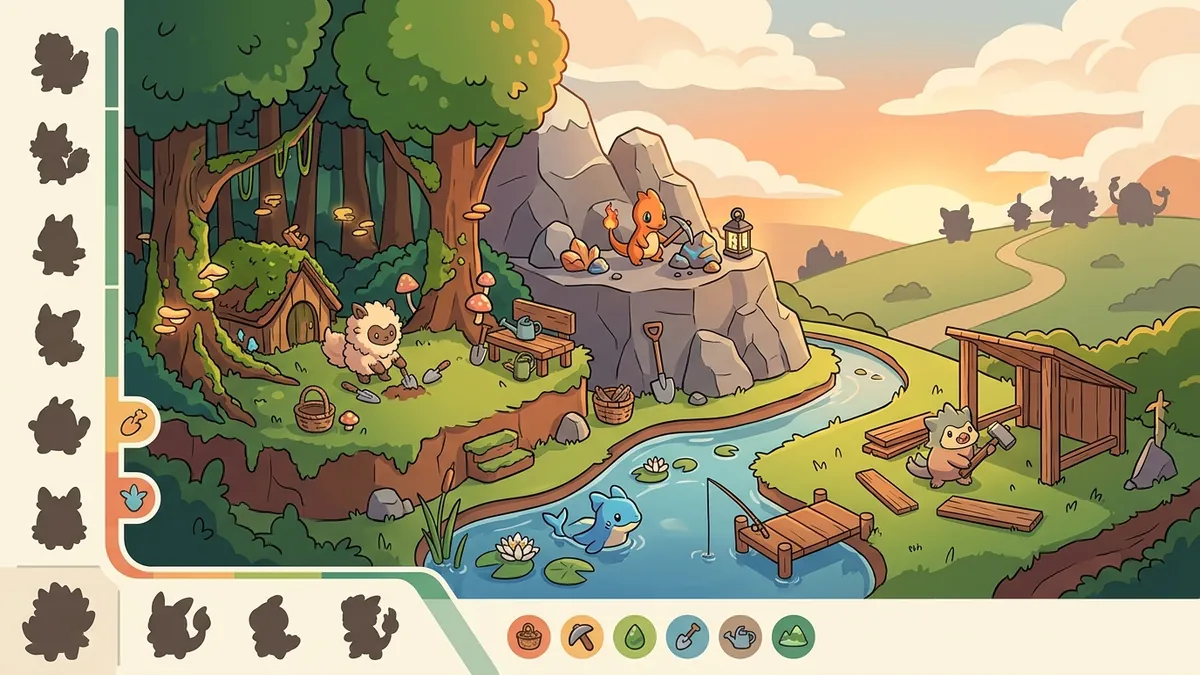
Use the Pokedex hints. Each unfilled entry shows a silhouette and a habitat hint. The hints tell you the primary type and sometimes the region where the Pokemon appears. Cross-reference hints with your current Environment Levels to figure out which Pokemon are within reach.
Stack weather conditions. Some Pokemon only appear during rain, sunshine, or nighttime. Rather than waiting passively, plan your play sessions around weather cycles. Build a cluster of habitats that share weather requirements so one rainy period can attract multiple new species.
Do not ignore food. Cooking and placing food items in habitats increases the attraction rate for many Pokemon. Check our cooking recipes guide for the full recipe list and which foods appeal to specific types.
Prioritize Important Requests. Some requests unlock new regions, and new regions mean access to Pokemon that simply cannot appear on your starter island. Push through the main request chains before going wide on habitat building.
Track your progress. The in-game Pokedex shows your completion percentage, but it helps to note which type categories you are missing. If you have 48 out of 50 Kanto Pokemon, finding those last two is more efficient than scattering your effort across all generations.
Generation Distribution Strategy
Here is a practical approach to working through the Pokedex generation by generation.
Weeks 1-2: Focus on Kanto and early Johto. These Pokemon have the lowest Environment Level requirements and the most forgiving habitat setups. You should be able to register 60-80 Pokemon just from these two generations.
Weeks 3-4: Push into Hoenn and Sinnoh alongside mid-game Kanto species. This is where you start needing Level 3 and Level 4 habitats consistently. Lucario, Gardevoir, and the Hoenn starters become accessible.
Weeks 5-6: Target Unova, Kalos, Alola, Galar, and Paldea species. The later generations have fewer Pokemon but often require more specific setups. Work on hybrid habitats (Bug/Steel, Ghost/Fire, etc.) during this phase.
Weeks 7+: Legendary hunting and cleanup. Your endgame push will focus on the hardest-to-get species — legendaries, weather-dependent spawns, and Pokemon with very specific multi-type habitat requirements.
This is not a rigid timeline. Pokopia is a relaxing game and there is no penalty for taking things slow. But if you want to hit 300 efficiently, batching your effort by generation and type makes the grind much smoother.
Hidden Pokedex Mechanics
A few Pokedex details are not obvious from the in-game interface.
Friendship level matters. A Pokemon at maximum friendship contributes slightly more to your Environment Level than one at baseline friendship. Over 300 Pokemon, that bonus adds up and makes attracting the final few species easier.
Some entries update retroactively. If a game update adds new information to a Pokemon’s Pokedex page (like a newly discovered habitat preference), your existing entry updates automatically. You do not need to re-befriend the Pokemon.
Completion percentage rounds down. The Pokedex shows whole percentages, so 299 out of 300 still displays as 99%. You need all 300 to see the full 100%.
Multiplayer visits count. If you visit a friend’s island and a Pokemon there befriends you, it counts toward your Pokedex. This is a great strategy for species you are struggling to attract on your own island. Check the multiplayer and cloud islands guide for tips on visiting other players.
FAQ
How many Pokemon are in Pokemon Pokopia? There are 300 numbered Pokemon in the main Pokopia Pokedex, plus event-exclusive Pokemon like Hoppip, Skiploom, and Jumpluff.
Do Pokemon evolve in Pokopia? No, Pokemon don’t evolve in Pokopia. Each Pokemon is a separate resident you must befriend individually.
How do I complete the Pokedex? Build habitats matching each Pokemon’s preferences, increase your Environment Level to attract rarer species, and complete Important Requests to unlock new areas.
What are the rarest Pokemon in Pokopia? Legendary Pokemon like Mewtwo, Kyogre, and Mew are the rarest. They require high Environment Levels and specific habitat conditions.
Do unique NPC variants count toward the Pokedex? No, the 7 unique variants (Peakychu, Mosslax, Smearguru, DJ Rotom, Tinkmaster, Professor Tangrowth) are NPCs and don’t count toward Pokedex completion.
Which generation has the most Pokemon in Pokopia? Kanto (Gen 1) has the most with approximately 50 Pokemon, followed by Johto with 19.
Can I catch legendary Pokemon in Pokopia? You don’t catch Pokemon in Pokopia — you befriend them by building the right habitats and meeting their comfort requirements.
What rewards do I get for completing the Pokedex? You earn Life Coins and exclusive items at milestone completions (50, 100, 150, 200, 250, 300 Pokemon registered).