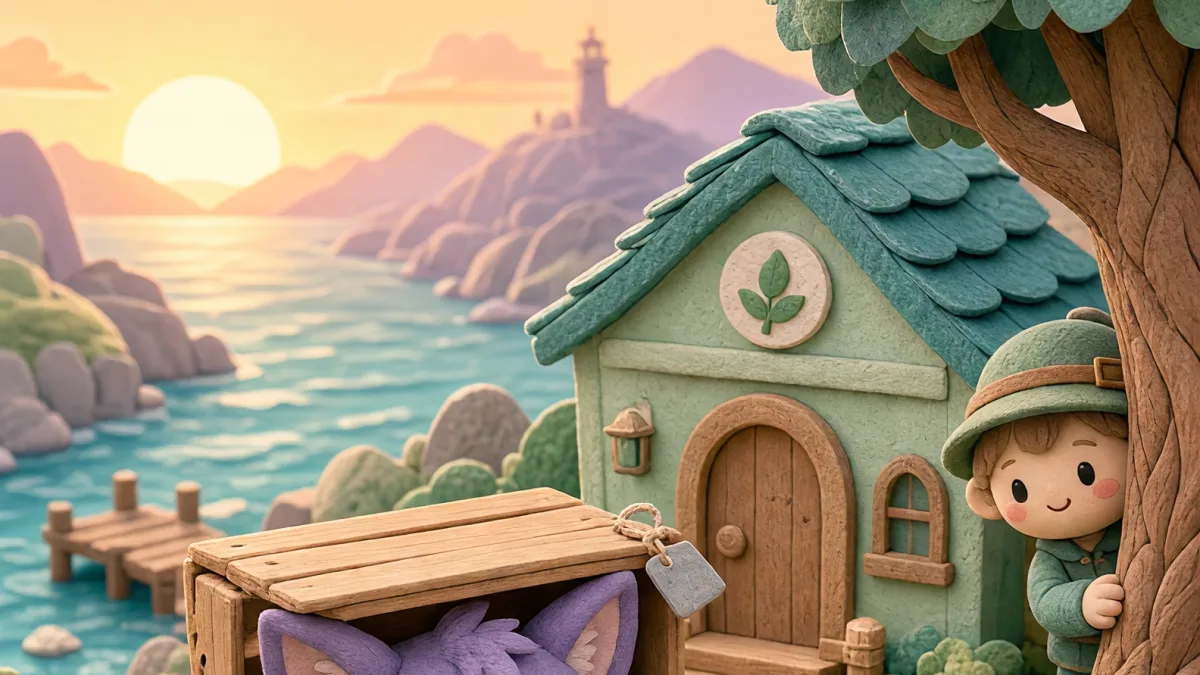
Pokopia Hide-and-Sneak is a stealth race, not a scavenger hunt for hidden Pokemon. After befriending Zorua and learning Camouflage, your goal is to cross the area and reach the Pokemon Center PC without the searching Pokemon catching you. The regular round lasts three minutes, and being spotted relocates you instead of ending the run immediately.
That distinction matters because an older version of this page described a different game with invented friendship points, achievement rewards, and region-based hiding spots. Those claims have been removed. This guide now separates the regular Zorua activity from the limited July 2026 contest and links the evidence used for each rule.
The Pokemon Company officially showed hide-and-seek as one of Pokopia’s multiplayer activities in its Pokemon Day 2026 Pokopia announcement. Detailed regular-mode mechanics and rewards below are cross-checked against Serebii’s Hide-and-Sneak database.
Quick Answer: How to Win Pokopia Hide and Seek
Talk to Zorua and start Hide-and-Sneak. You begin away from the Pokemon Center and have three minutes to reach its PC. Watch the searching Pokemon’s movement, use cover, and stop before you enter its line of sight. If the route is exposed, use Camouflage near a believable object and wait for the searcher to turn away.
The safest play is patient movement in short bursts:
- Identify the next piece of solid cover before moving.
- Advance only while the searching Pokemon faces away.
- Stop completely when it becomes alert or turns toward you.
- Use Camouflage to blend into a natural cluster of objects.
- Save a direct final run for when the path to the Pokemon Center door is clear.
If you are still opening Bleak Beach, use the Bleak Beach walkthrough first. For the larger progression route, the Withered Wasteland walkthrough is the live regional guide.
How to Unlock Hide-and-Sneak with Zorua
Hide-and-Sneak is tied to Zorua and the Camouflage ability. Progress through Bleak Beach until Zorua’s request becomes available, complete that request, and learn Camouflage. Once the ability is unlocked, you can ask Zorua to play. Serebii also notes that another Pokemon may sometimes invite you to a round.
Camouflage is not merely cosmetic here. It is the mechanic that lets Ditto copy a nearby item and pass as part of the scenery. Our Ditto abilities guide keeps Camouflage in the full ability progression list.
If Zorua is present but the activity is unavailable, confirm that you completed the request rather than only meeting the Pokemon. The official July contest instructions likewise required players to finish Zorua’s Bleak Beach request and unlock the regular activity before joining the event.
Regular Hide-and-Sneak Rules
The regular activity starts by moving you away from the Pokemon Center. Your target is the PC inside the center, and the clock gives you three minutes to reach it. One main Pokemon and another helper search the route.
Searchers react to movement. When one notices something suspicious, it investigates; if it confirms your position, the game resets you to another location. The round can still be recovered, but the clock does not become less important. Treat every detection as lost route progress and immediately look for safe cover before trying again.
The core loop is therefore different from conventional hide-and-seek:
- You are moving toward a fixed destination.
- The searching Pokemon patrol instead of hiding from you.
- Camouflage helps you cross watched spaces.
- A detection relocates you rather than awarding friendship points or ending an achievement streak.
Best Route and Movement Strategy
There is no single universal path because the town layout depends on what you built. The best route is the one with the most visual breaks between your start point and the Pokemon Center.
Before the first move, rotate the camera and trace two possible lines: a short exposed route and a longer covered route. Use the covered route until you are close to the center. Trees, buildings, stalls, fences, and placed objects can interrupt sight lines. Wide empty plazas make the searcher’s next turn harder to survive.
Avoid long diagonal runs across open ground. Move from cover to cover, then pause long enough to read the searcher’s direction. When the final approach opens, enter the Pokemon Center and interact with the PC. Do not spend the last part of the run circling outside for an ideal angle if a safe doorway is already available.
Camouflage Tips That Actually Help
Camouflage works best when the copied item belongs exactly where you stop. A crate beside storage is plausible; a lone indoor-looking object in the center of a path is suspicious. Match the object to nearby scenery and avoid transforming in full view of a searcher.
Movement is the larger giveaway. Copying a convincing object does not help if it slides while a Pokemon watches. Transform behind cover, let the patrol settle, and move only after its attention shifts.
Your own town design can make future rounds easier. A route with spaced trees, small structures, and object groups gives you more places to break sight. You do not need to redesign the entire town for the minigame, but a completely bare approach to the Pokemon Center removes most of Camouflage’s value.
Regular Rewards
The documented regular rewards are simple. Serebii lists:
| Result | Reward |
|---|---|
| Win without being detected | 4 Fresh Carrots |
| Win the game | 3 Fresh Carrots |
| Win several times in a row | 2 Stardust |
The regular page does not support claims about seasonal cosmetic rotations, Life Coins, a large win-count achievement, or fixed friendship payouts. Those items are intentionally absent from this guide.
Multiplayer Hide and Seek
Pokopia supports play with up to three other people. The official Pokemon Day announcement confirms town visits and hide-and-seek among the shared activities. In regular multiplayer Hide-and-Sneak, all participating players try to reach the Pokemon Center PC, and the first to arrive wins.
Building a readable route matters even more with several players moving at once. Other players can reveal where patrols are looking, but their movement can also tempt you into an unsafe sprint. Follow the sight-line rules rather than copying the person in front of you.
See the Pokopia multiplayer and Cloud Islands guide for connection and visiting context.
Regular Game vs. July 2026 Contest
Do not confuse the permanent Zorua activity with the limited Hide-and-Sneak Contest. The official Nintendo event page states that the contest ran from July 19, 2026 at 5:00 a.m. to July 27, 2026 at 4:59 a.m. local time.
That event used completion-time prizes, required the then-current version 1.1.1, and could run in towns or on Cloud Islands. It is now expired. A rebuilt Pokemon Center, an internet connection for first activation, and Zorua’s completed request were event requirements; they should not be presented as proof that the contest is still live.
Common Problems
Zorua will not offer the game: finish Zorua’s Bleak Beach request and confirm that Camouflage is available. Meeting Zorua alone is not the full unlock.
You keep getting detected: shorten each movement burst. A slow route with cover is faster than repeated relocations from an exposed sprint.
Camouflage does not fool the searcher: choose an object that fits the surrounding area and stop moving while the searcher watches.
You cannot start the July contest: the event window ended July 27, 2026. Changing the system clock does not make this page call an expired event active.
FAQ
What is Hide-and-Sneak in Pokemon Pokopia? It is Zorua’s stealth minigame. Reach the Pokemon Center PC without being caught by the searching Pokemon; in multiplayer, up to three other players can race with you.
How do I unlock Pokopia Hide-and-Sneak? Progress through Bleak Beach, complete Zorua’s request, and unlock Camouflage. You can then ask Zorua to play.
How long is a regular round? The regular Hide-and-Sneak activity gives you three minutes.
What happens if a Pokemon sees me? You are moved to another position and can continue while the timer runs.
How should I use Camouflage? Copy an item that naturally belongs near your hiding place and stay still while the searcher faces you.
What rewards are documented? Four Fresh Carrots for winning unseen, three Fresh Carrots for a win, and two Stardust for several consecutive wins, according to Serebii.
Can friends join? Yes. Pokopia supports up to three other players, and the regular multiplayer race is won by reaching the Pokemon Center PC first.
Is the Zorua contest active now? No. The official July 2026 contest ended on July 27 at 4:59 a.m. local time. The regular Hide-and-Sneak activity is separate.
Sources and Correction Note
- The Pokemon Company: Pokemon Day 2026 Pokopia announcement
- Nintendo: Zorua’s Hide-and-Sneak Contest
- Serebii: regular Hide-and-Sneak mechanics and rewards
This page was fact-corrected on August 25, 2026. If a regular-mode rule changes in a later game update, email contact@pokopia.center with the page URL and a current source.