Pokemon Pokopia just dropped its first-ever limited-time event, and it is a big deal. More Spores for Hoppip runs from March 10 to March 25, 2026, giving you a tight window to collect cotton spores, unlock exclusive picnic furniture, and befriend three Pokemon that will not be available anywhere else in the game once the event ends. That means Hoppip, Skiploom, and Jumpluff are on the clock.
If you have been playing since launch and already have a rebuilt Pokemon Center, you are ready to jump in right now. If you are brand new, check out our beginner guide first because you will need a functioning Pokemon Center before the event unlocks. Either way, this guide covers everything you need to know to finish the event, grab all three Pokemon, and walk away with a full set of picnic-themed furniture before March 25.
What Is the More Spores for Hoppip Event?
More Spores for Hoppip is the first limited-time event in Pokemon Pokopia’s history. It launched on March 10, 2026 — just five days after the game’s global release — and it wraps up on March 25. That gives you a total of 15 days to participate, but since you are reading this now, the clock is already ticking.
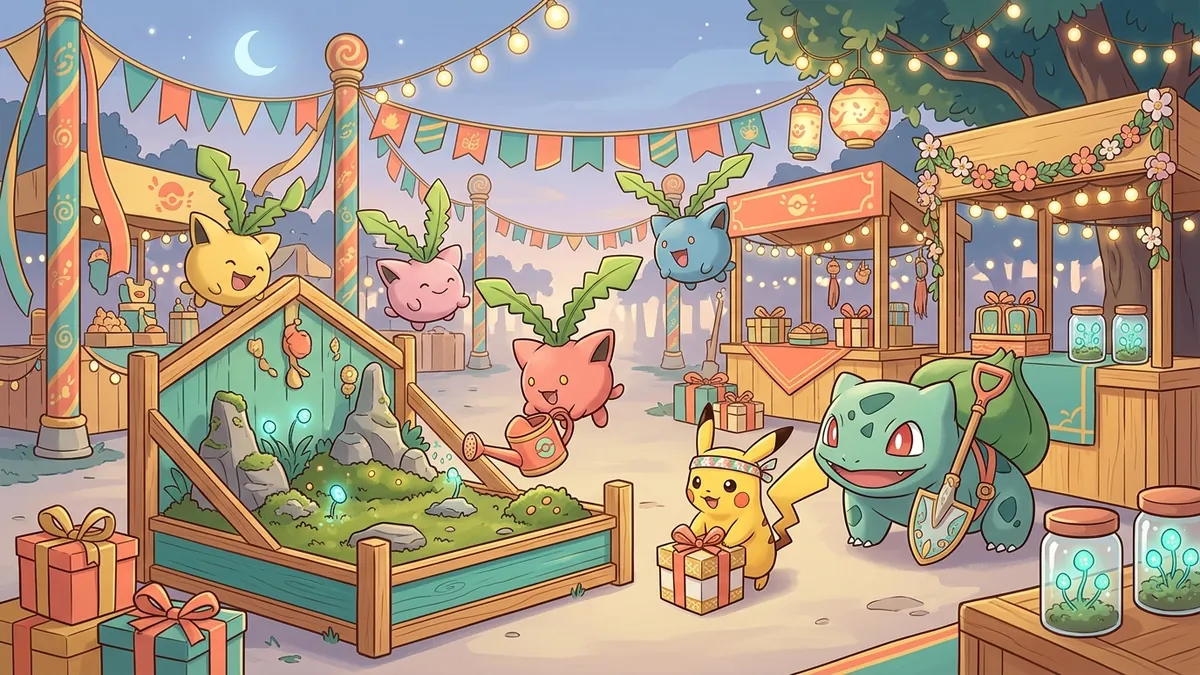
The event introduces cotton spores — fluffy white collectibles that float near trees, gardens, and open fields throughout your town. Gather them and trade them for picnic-themed furniture at a special booth inside your Pokemon Center. That furniture lets you build habitats that attract Skiploom and Jumpluff.
The big draw: Hoppip, Skiploom, and Jumpluff are event-exclusive Pokemon. They are not in the regular spawn tables or hiding in some secret location. Once March 25 passes, they are gone — and there is no guarantee the event will return.
For a full list of every event on the 2026 schedule, check our events calendar to see what is coming next.
Event Requirements and Eligibility
Before you start chasing cotton spores, make sure you meet the entry requirements. There are two conditions you need to hit, and one important limitation to be aware of.
You need at least one rebuilt Pokemon Center. This is non-negotiable. The event content — the spore exchange booth, the habitat blueprints, and the Hoppip encounter trigger — all live inside the Pokemon Center. If you have not rebuilt one yet, that needs to become your top priority right now. The good news is that you only need one. It does not matter which area it is in, and you do not need to upgrade it beyond the basic rebuild.
The event does not work on Cloud Islands. This is the biggest gotcha. If you have been spending most of your time on Cloud Islands with friends, you will need to head back to a standard town to participate. Cloud Islands are fantastic for multiplayer building and exploration, but they are cut off from this event entirely. The cotton spores simply do not spawn there, and the event booth does not appear in Cloud Island Pokemon Centers.
There is no level requirement beyond having a Pokemon Center. You do not need a specific trainer rank or a certain number of Pokemon befriended. As long as you have a rebuilt Pokemon Center in any of your town areas, you are good to go.
If you need help with the Cloud Islands system or want to understand what you can and cannot do there, our advanced tips guide breaks down all the multiplayer mechanics.
How to Collect Cotton Spores
Cotton spores are the heart of this event. Here is how the spawning works and how to collect efficiently.
Where Cotton Spores Appear
Cotton spores spawn outdoors — floating above grass patches, circling trees, hovering near flower beds, and drifting along paths. They look like small, glowing white puffs with a faint pink shimmer, easy to spot even at night. Walk through a spore to collect it automatically. A counter in the top-right corner of your screen tracks your total.
Spawn Rates and Timing
Cotton spores respawn on a timer. Based on community testing, a fresh batch of spores appears every 30 minutes of real time. Each spawn cycle drops between 8 and 15 spores across your town, depending on how many areas you have unlocked and developed. Towns with more greenery — trees, gardens, flower plots — tend to get more spore spawns per cycle.
Here is a quick breakdown of what to expect:
- Small town (1-2 areas developed): 8-10 spores per cycle
- Medium town (3-4 areas developed): 10-13 spores per cycle
- Large town (5+ areas developed): 13-15 spores per cycle
If you are trying to maximize your spore income, the best thing you can do is plant more trees and expand your gardens. The spawning system favors areas with dense vegetation, so players who have invested in farming and landscaping have a real advantage here. Our farming guide has tips on quick-growing trees and efficient garden layouts that can help you boost your spawn rates during the event.
Efficient Collection Tips
Create a loop through your town that hits every green area. Start at your Pokemon Center, run through garden areas, swing by orchards and tree groves, loop through flower fields, and circle back. A full sweep takes about 5-7 minutes.
- Check behind buildings. Spores sometimes spawn in spots you would not normally visit.
- Plant temporary trees. More vegetation means more spawn points.
- Do not idle on menus. The respawn timer runs on real time, so spores keep spawning even while you are in menus.
- Play multiple short sessions. Three or four 15-minute sessions per day beat one long session because you hit more spawn cycles.
Picnic Furniture Exchange — All Items and Costs
Once you have cotton spores in your pocket, head to the special event booth inside your Pokemon Center. A new NPC — a cheerful Hoppip trainer with a picnic basket — sits near the entrance and handles all exchanges.
The picnic-themed furniture set includes both decorative items and functional habitat pieces. Decorative items are purely cosmetic and great for making your town look festive. Habitat items are the ones you need to attract Skiploom and Jumpluff, so prioritize those if your spore budget is tight.
Decorative Picnic Items
| Item | Spore Cost | Description |
|---|---|---|
| Picnic Blanket | 15 spores | A red-and-white checkered blanket that can be placed on any grass tile |
| Wicker Basket | 10 spores | A cute basket with a baguette sticking out of the top |
| Lemonade Pitcher | 10 spores | Glass pitcher with lemon slices — has a subtle sparkle animation |
| Flower Garland | 20 spores | String of flowers that can be hung between two posts or trees |
| Picnic Lantern | 12 spores | Paper lantern that glows softly at night in pink and white |
| Cotton Spore Wreath | 25 spores | A decorative wreath made of preserved cotton spores — the rarest cosmetic |
| Hoppip Wind Chime | 18 spores | Tiny Hoppip figures dangling from a wooden frame — makes gentle chime sounds |
Habitat Items (Required for Skiploom and Jumpluff)
| Item | Spore Cost | Description |
|---|---|---|
| Spore Garden Planter | 30 spores | A large planter filled with spore-producing flowers — core habitat item |
| Breeze Platform | 35 spores | An elevated wooden platform where Grass/Flying types like to rest |
| Cotton Cloud Nest | 40 spores | A fluffy nest made of cotton spores — required for Jumpluff habitat |
| Meadow Flower Ring | 25 spores | A circle of wildflowers that creates a habitat zone |
| Sunlight Reflector | 20 spores | A polished mirror that redirects sunlight toward habitat areas |
You will need the habitat items to progress through the main event quest line and attract the evolved forms. Budget your spores carefully — if you want every single item in the shop, you will need roughly 260 cotton spores total. That is achievable within the event window, but it requires consistent daily collecting.
How to Befriend Hoppip
Hoppip is the first Pokemon you will encounter during the event, and getting one is tied directly to the event’s opening quest.
Triggering the Hoppip Quest
When you first enter your Pokemon Center during the event period, the Hoppip trainer NPC introduces herself and gives you a short quest called “Spores on the Wind.” The quest asks you to collect your first 10 cotton spores and bring them back. This is essentially a tutorial for the event mechanics.
After you hand over the 10 spores, the NPC tells you that a wild Hoppip has been spotted near the edge of town, drawn by the concentration of cotton spores in the area. She marks the location on your map.
Finding and Befriending Hoppip
Head to the marked location — it will always be near the largest cluster of trees in your town. Hoppip appears as a small, pink, floating Pokemon bobbing gently in the breeze. Approach it slowly. Like most wild Pokemon in Pokopia, Hoppip is skittish and will float away if you sprint directly at it.
The befriending process follows Pokopia’s standard system:
- Approach slowly until the interaction prompt appears.
- Offer a gift. Hoppip prefers berries and flowers. Oran Berries and Gracidea Flowers have the highest acceptance rate.
- Wait for the trust meter to fill. Hoppip has a moderate trust threshold — you will likely need 2-3 gift offerings across 2 separate visits.
- Complete the friendship prompt once the trust meter is full.
Once Hoppip is befriended, it joins your town and roams around freely. You can assign it to work on your farm, help with gardens, or just let it float around looking adorable. For a full list of all Pokemon you can find in the game and where they show up, check out our complete Pokemon locations guide.
How to Get Skiploom — Habitat Building
Skiploom is Hoppip’s evolution, and in Pokopia you do not evolve Pokemon through levels or experience. Instead, you create the right habitat conditions and the evolved form shows up on its own. This is where the picnic furniture becomes critical.
Skiploom Habitat Requirements
To attract Skiploom, you need to build a habitat area that meets these conditions:
- 1x Spore Garden Planter (30 spores) — placed in an open outdoor area
- 1x Meadow Flower Ring (25 spores) — placed within 3 tiles of the planter
- 1x Sunlight Reflector (20 spores) — placed facing the planter
- At least 3 trees within 5 tiles of the habitat zone
The total cost for the minimum Skiploom habitat is 75 cotton spores plus whatever trees you already have planted nearby. If you do not have trees in the area, you will need to plant some and wait for them to grow — another reason to get started on this event as early as possible.
Waiting for Skiploom to Arrive
After you place all the required items, a green glow appears around the habitat zone. This signals that the area is active and waiting for a visitor. Skiploom does not show up instantly. Based on player reports, it takes between 1 and 3 in-game days for Skiploom to arrive after the habitat is complete.
When Skiploom appears, it lands on the Spore Garden Planter and stays there. Walk up and interact with it. Unlike Hoppip, Skiploom does not require a befriending process — it trusts you automatically because you built its habitat. It joins your town immediately.
How to Get Jumpluff — Advanced Habitat
Jumpluff is the final evolution and the hardest to obtain. Its habitat requirements are steeper, and it demands items that cost more spores.
Jumpluff Habitat Requirements
Jumpluff needs everything Skiploom needed, plus additional pieces:
- All Skiploom habitat items (already placed and active)
- 1x Breeze Platform (35 spores) — placed within 2 tiles of the Skiploom habitat
- 1x Cotton Cloud Nest (40 spores) — placed on top of the Breeze Platform
- At least 5 trees within 5 tiles of the habitat zone
- Skiploom must already be living in your town
The additional cost for the Jumpluff upgrade is 75 more spores on top of what you spent on the Skiploom habitat. That brings the combined total to 150 cotton spores just for the habitat items needed to get all three Pokemon. Factor in the 10 spores for the opening quest, and you are looking at 160 spores minimum before you spend anything on decorative items.
Jumpluff Arrival and Behavior
Jumpluff takes longer to appear than Skiploom — expect 2 to 5 in-game days after the habitat is complete. It arrives floating high above the Cotton Cloud Nest and slowly descends. Like Skiploom, it joins your town automatically once it arrives.
Jumpluff has a unique behavior that makes it one of the most useful Pokemon in the game. It periodically releases cotton spores around your town, which boosts your flower and crop growth rates by a small percentage. This effect persists even after the event ends, making Jumpluff a long-term investment in your farming operation.
Best Strategy to Complete the Event Before March 25
With the event ending on March 25, you need a solid plan. Here is a phased breakdown that gets you all three Pokemon and every furniture item.
Days 1-3 — Foundation (Target: 60 spores). Focus purely on collecting cotton spores. Do not spend any yet except for the mandatory 10-spore quest. Run your collection routes 4-5 times per day and plant extra trees to boost future spawn rates.
Days 4-6 — Skiploom Habitat (Target: 120 total spores). Spend 75 spores on the Skiploom habitat items and place them immediately. Keep collecting while you wait for Skiploom to arrive (1-3 in-game days).
Days 7-9 — Jumpluff Habitat (Target: 195 total spores). Spend 75 spores on the Jumpluff habitat upgrades. Place the Breeze Platform and Cotton Cloud Nest. Continue collecting for decorative items while you wait for Jumpluff (2-5 in-game days).
Days 10-15 — Decorative Items (Target: 260+ total spores). With all three Pokemon secured, spend remaining spores on cosmetic picnic furniture. Buy your favorites first in case the event ends before you collect everything.
Emergency Speedrun (Starting Late?)
If you only have a few days left, here is the priority order:
- Complete the opening quest (10 spores) — gets you Hoppip
- Buy Skiploom habitat items (75 spores) — place immediately
- Buy Jumpluff habitat items (75 spores) — place as soon as Skiploom arrives
- Skip decorative items unless you have spores to spare
The minimum spore cost for all three Pokemon is 160. At roughly 30-40 spores per day with active collecting, you can hit that in 4-5 days.
Event-Exclusive Rewards Worth Keeping
Beyond the three Pokemon, several items from this event hold long-term value.
Jumpluff’s passive farming boost is the standout. The growth rate buff it provides to nearby crops and flowers stacks with other farming bonuses, giving you a genuine gameplay advantage that lasts forever.
The Cotton Spore Wreath is the rarest cosmetic because most players will not have enough spore budget after securing all three Pokemon. Grab it if you can — rare event cosmetics become bragging rights fast.
Habitat items remain functional after the event. The Spore Garden Planter, Cotton Cloud Nest, and other habitat pieces stay placed and keep working as decorations.
Hoppip, Skiploom, and Jumpluff themselves are the biggest prizes. The developers confirmed these Pokemon are event-exclusive with no current plans to add them to the regular game. This is your only shot.
Common Mistakes to Avoid
Players have been running into a few recurring problems with this event. Save yourself the frustration by avoiding these:
Trying to play on Cloud Islands. Cotton spores do not spawn there, and the event booth does not appear. You must be in a standard town with a rebuilt Pokemon Center.
Buying decorative items before habitat items. Decorative furniture looks great but does not help you get Skiploom or Jumpluff. Always prioritize habitat items first.
Not planting enough trees near your habitat. Both Skiploom and Jumpluff require a minimum number of trees within 5 tiles. If your habitat is not glowing green, you need more trees.
Waiting too long to start. The Jumpluff habitat can take up to 5 in-game days to attract Jumpluff. Starting the habitat chain on the last few days means you might run out of time.
Skipping corners of your town. Cotton spores spawn behind buildings and at map edges. Run your collection route through every area, not just the obvious gardens.
What Happens After the Event Ends
When March 25 hits, here is what changes:
- Cotton spores stop spawning. Any unspent spores remain in your inventory as cosmetic keepsakes.
- The event booth disappears from your Pokemon Center. No more furniture exchanges.
- Hoppip, Skiploom, and Jumpluff stay permanently if you already befriended them.
- All furniture and habitat items remain. Everything you purchased or placed is yours to keep forever.
The only thing you lose is the ability to earn new cotton spores and exchange them. Everything already in your possession stays permanently.
For more ways to optimize your town after the event wraps, our advanced tips and tricks guide covers endgame strategies that pair well with your new Hoppip family Pokemon.
FAQ
When does the More Spores for Hoppip event end? The event runs from March 10 to March 25, 2026.
Do I need a Pokemon Center for the Hoppip event? Yes, you need at least one rebuilt Pokemon Center in any area to access the event.
Can I get Hoppip after the event ends? No, Hoppip, Skiploom, and Jumpluff are exclusive to this event and cannot be found outside it.
Does the Hoppip event work on Cloud Islands? No, the event is only available in towns with a rebuilt Pokemon Center, not on Cloud Islands.
What are cotton spores used for? Cotton spores can be exchanged for exclusive picnic-themed furniture items during the event.
How do I get Skiploom and Jumpluff? Build picnic-themed habitats using items exchanged from cotton spores to attract Skiploom and Jumpluff.
Is this the first Pokopia event? Yes, More Spores for Hoppip is the first limited-time event in Pokemon Pokopia.
What specialty does Hoppip have? Hoppip and its evolutions have unique Spore-related specialties useful for farming and habitat decoration.